

Chef Biography
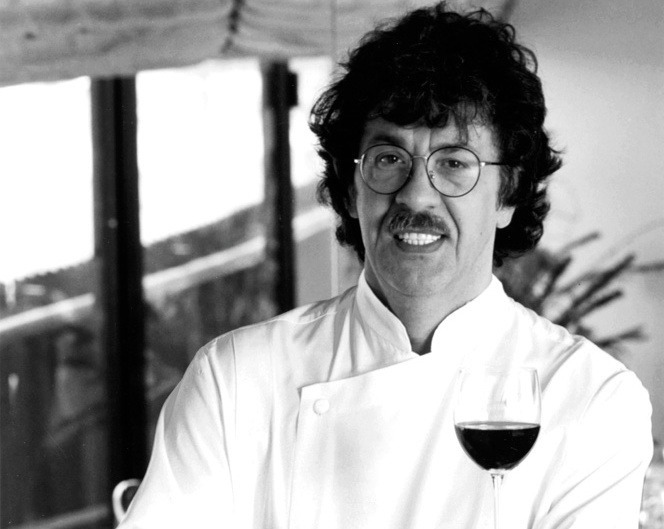
Hailed as the Chef of the Twentieth Century, Jean-Louis Palladin was born in the Gascony area of France, known as a French food paradise, in the town of Condom, France, and yes, they have the world’s largest condom museum there. His mother was Spanish and his father was Italian, and that combination of cooking styles was a great inspiration for young Palladin.
At age 12, he began working at the Le Regent in Condom, and at 14, moved over to work at the Ecole Hoteliere de Toulouse. At age 17 he worked for a year at the Plaza Athenee in Paris. A year later in 1968, he moved to Monte Carlo to open La Table des Cordeliers and received his first star in 1971. In 1974 at age 28, he became the youngest chef ever to win a second Michelin Star and in 1978, Christian Millau and his Gault Millau guide gave him an 18/20 rating.
In 1979, he left Monaco to go to the US and open Jean-Louis at the Watergate in Washington DC. In May of 1993, after all the Nixon Watergate issues were over, Great Chefs traveled to DC to tape Chef Jean-Louis @ The Watergate, for their Great Chefs of the East series where he prepared a Celery Soup, a Navaron of Lamb for their new Great Chefs-Great Cities series, and also prepared a Strawberry Fouette for a Great Chefs one-hour special titled French Fest. Later that month, Chef Jean-Louis won the Best Chef Award from The James Beard Foundation, along with Great Chef Larry Forgione of New York City. Later that same year in 1993, he opened a new restaurant in Richmond VA with Great Chef Jimmy Sneed, called “The Frog and the Redneck” which became very successful.
In 1995, Chef Jean-Louis Palladin opened “Napa” in the Rio Hotel in Las Vegas and in 1999, he opened “Palladin” in New York City.
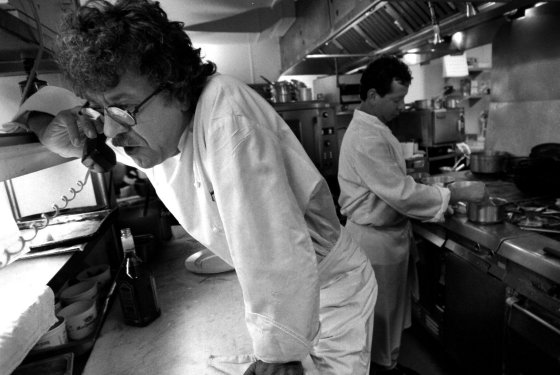
In February of 2000, Great Chefs was out in Las Vegas, and asked if he would like to prepare a few dishes at “Napa” for their new series Great Chefs of America. Chef Palladin was so pleased to see the Great Chefs crew again, that he prepared five dishes, although he was already not feeling well. He prepared a Tile Fish; Antelope Loin; Foie Gras; Shrimp Tempura and a fabulous Roasted Banana dessert. This may very well have been Chef Jean-Louis Palladin’s last appearance before television cameras.
In November 2001, Chef Jean-Louis Palladin passed away the same week as the Beatles youngest star, George Harrison, both stars in their own way, and both in their mid 50s. He will be missed as a chef and friend.
Recipes
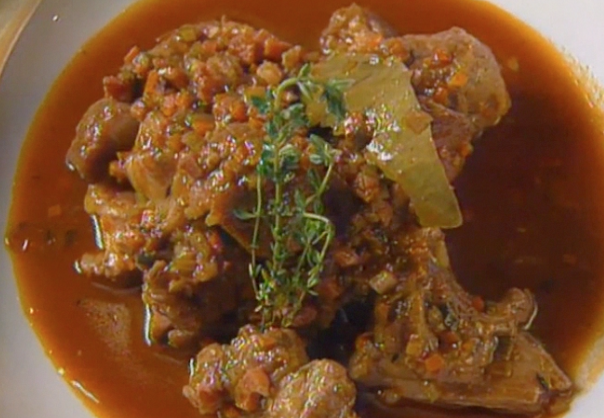
Navaron of Lamb with Vegetables
Serving: 4 Print Navaron of Lamb with Vegetables By Matt King June 16, 2014 Jean-Louis Palladin, called the best chef of the 20th century, turns his skills to the humble stew. Pieces of lamb shoulder are stewed in a rich mixture of wine, stock, and sauteed vegetables. Even Virginia ham adds its flavor to the […]
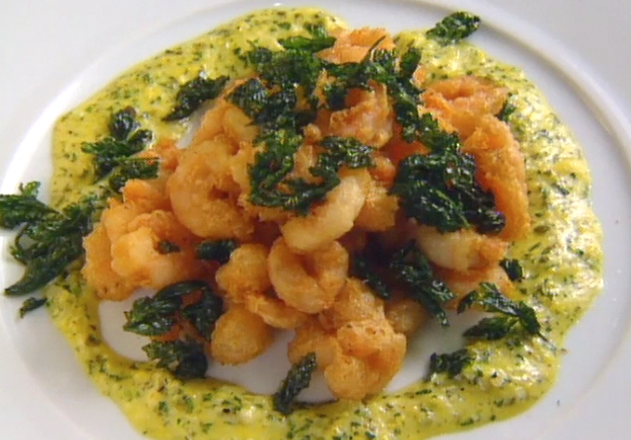
Shrimp Tempura
Serving: 4 Print Shrimp Tempura By Matt King June 16, 2014 Simplicity itself, and so good: shrimp are crisp-fried in thin tempura batter are served with fresh tartar sauce and flash-fried parsley. Chef Jean-Louis Palladin stresses the importance of using grapeseed oil: it can be heated to high temperature without burning, and it is the […]
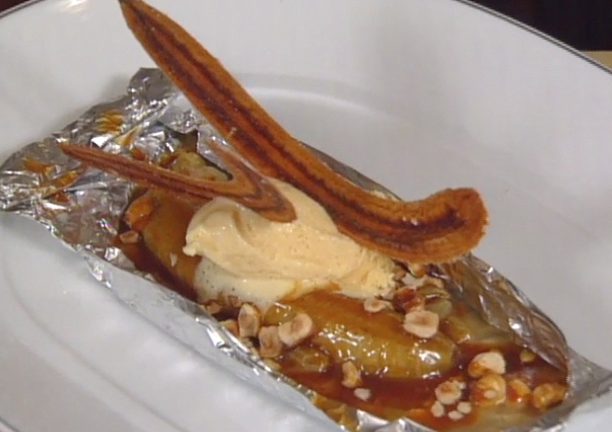
Roasted Bananas with Crushed Hazelnuts, Banana Ice Cream, and Banana-Caramel Sauce
Serving: 4 Print Roasted Bananas with Crushed Hazelnuts, Banana Ice Cream, and Banana-Caramel Sauce By Matt King June 16, 2014 This pretty dessert can be finishing in the oven while you serve the entree for a dinner party. Papillotes of foil are opened to reveal bananas roasted in a rum-raisin sauce which makes itself as […]
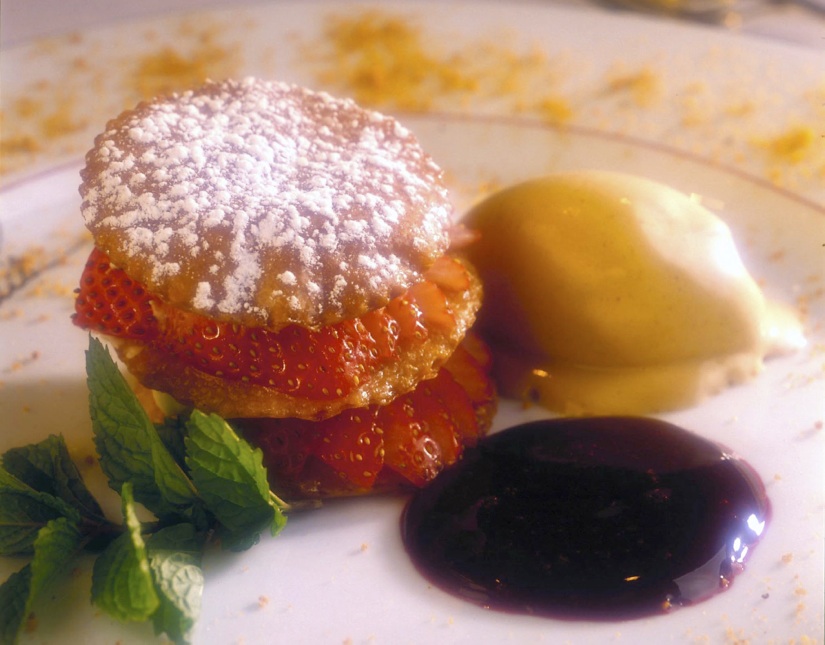
Strawberry Crème Fouette
Serving: 4 Print Strawberry Crème Fouette By Matt King June 16, 2014 Jean-Louis at the Watergate was a legendary place where the chef called “the Chef of the 20th Century” created a new menu every day, serving his small group of guests to perfection. This dessert is one of the sweets from that era, wedges […]

Foie Gras Crusted with Dried Panettone with Raisin and Citrus Coulis
Serving: 4 Print Foie Gras Crusted with Dried Panettone with Raisin and Citrus Coulis By Matt King June 16, 2014 This appetizer begins with panettone, the Italian fruit-filled yeast bread served during the holidays. Luxe slices of foie gras are heavily coated in crushed panettone and pan-fried. They are served with a raisin-studded sauce which […]
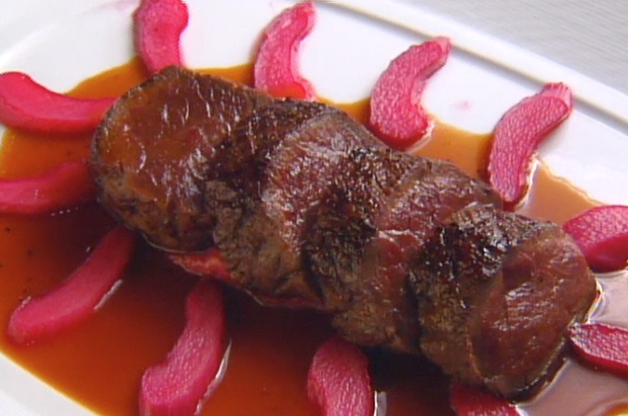
Seared Antelope Loin with Rhubarb
Serving: 2 Print Seared Antelope Loin with Rhubarb By Matt King June 16, 2014 Rhubarb provides both color and a little acidity for this dish, pan-seared antelope with rhubarb slices, rhubarb puree, and rhubarb sauce. Chef Jean-Louis Palladin notes that the sauce mixture is similar to a gastrique — a mixture of sweet and sour […]
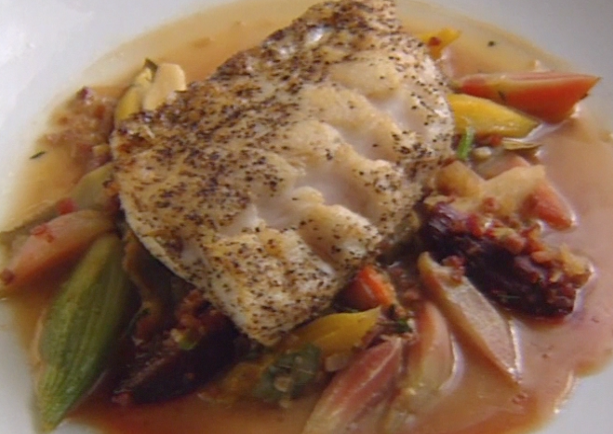
 Sautéed Tile Fish and Vegetable Ragout
Serving: 4 Print  Sautéed Tile Fish and Vegetable Ragout By Matt King June 16, 2014 The late Chef Jean-Louis Palladin was called the definitive chef of the 20th century. Yet he expressed his cooking philosophy simply: “If you have good ingredients, I don’t see you need to be a chef!” For this dish, Chef […]
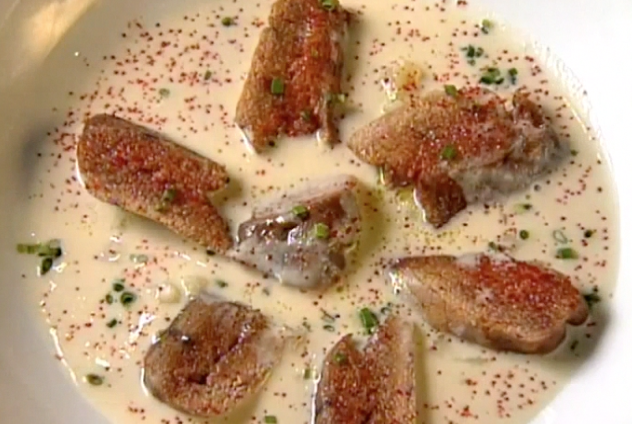
Celery Root Soup with Shad Roe
Serving: 4 Print Celery Root Soup with Shad Roe By Matt King June 16, 2014 A member of the herring family, the shad is particularly prized for its delicately flavored roe, which is available only for a short season in the early spring. To enjoy this soup at other times of year, substitute shrimp for […]